
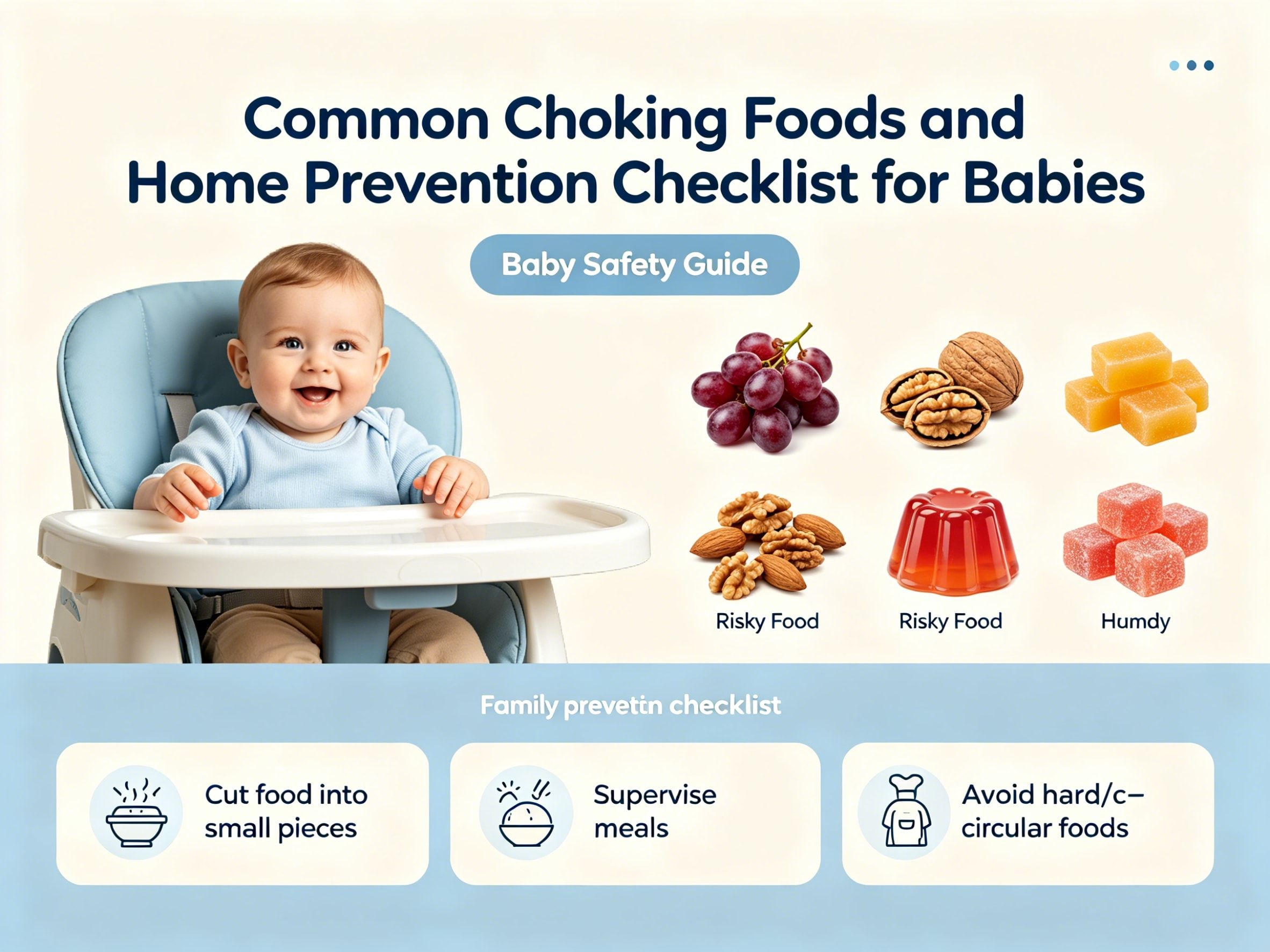
Common Choking Foods and Home Prevention Checklist for Babies
- Published on
- //3 mins read/––– views
Most choking emergencies are preventable. Families can lower risk significantly by changing food form, feeding posture, and environment.
This guide focuses on prevention before panic.
Why prevention is the highest-value strategy
Emergency response is essential, but prevention reduces event probability in the first place.
Main risk drivers:
- high-risk food shape/texture
- distracted or moving feeding environments
- age-mismatched food progression
- small object access in play zones
High-risk food patterns for young children
Frequently cited choking hazards include foods that are:
- round and firm
- sticky/clumping
- hard raw pieces
- large chunks without age-appropriate modification
Risk reduction means changing shape and texture, not just changing food brand.
Safer food-prep principles
- cut foods into age-appropriate pieces
- soften/cook hard textures when needed
- avoid offering risky shapes whole
- supervise all eating (no unsupervised snacking)
Local pediatric feeding guidance should always guide texture progression.
Feeding environment checklist
- seated, stable feeding position
- no running/walking/eating at the same time
- avoid high-distraction screens/toys during active chewing
- one caregiver in direct view during meals/snacks
Environment design prevents many avoidable incidents.
Non-food choking hazards at home
Beyond meals, common hazards include:
- small toy parts
- loose batteries/magnets
- beads/coins/button-sized items
- broken object fragments
Use floor-level sweeps and age-rated toy checks regularly.
10-point home prevention checklist
- high-risk foods modified before serving
- baby always seated for eating
- direct adult supervision at meals
- no feed/play while moving in strollers or cars without proper supervision context
- toy age labels reviewed
- small objects removed from floor-level zones
- emergency numbers visible
- caregivers trained in infant/child choking first aid
- grandparents/babysitters taught same rules
- monthly safety review at home
Common prevention mistakes
Mistake 1: “If my child has teeth, any texture is safe”
Chewing skills and airway protection timing still vary.
Mistake 2: “I only need to worry during meals”
Many incidents involve non-food objects.
Mistake 3: “One caregiver knows first aid, that is enough”
All regular caregivers should know core response steps.
Mistake 4: “Toy store age labels are optional suggestions”
Age labels are important safety filters.
FAQ
Are choking hazards only a baby issue?
Risk is highest in younger children but remains relevant across early childhood.
Is mashing food enough for safety?
Texture, shape, and supervision all matter together.
How often should we do home hazard checks?
A quick weekly sweep plus monthly deeper check works well.
What is the single best prevention action?
Supervised seated eating with age-appropriate food preparation.
References
- CDC: Choking hazards (infant and toddler nutrition)
- AAP HealthyChildren: Choking prevention
- NHS: How to stop a child from choking
- CPSC: Small parts and choking hazard guidance
- CPSC: Small parts and choking hazard labeling FAQs
Final takeaway
The safest choking strategy starts before the meal: age-appropriate food prep, seated supervision, and a hazard-aware home setup are the strongest protection for babies and young children.