
Breathing & Movement Wearables for Babies: Useful Signal or Anxiety Multiplier?
- Published on
- //3 mins read/––– views
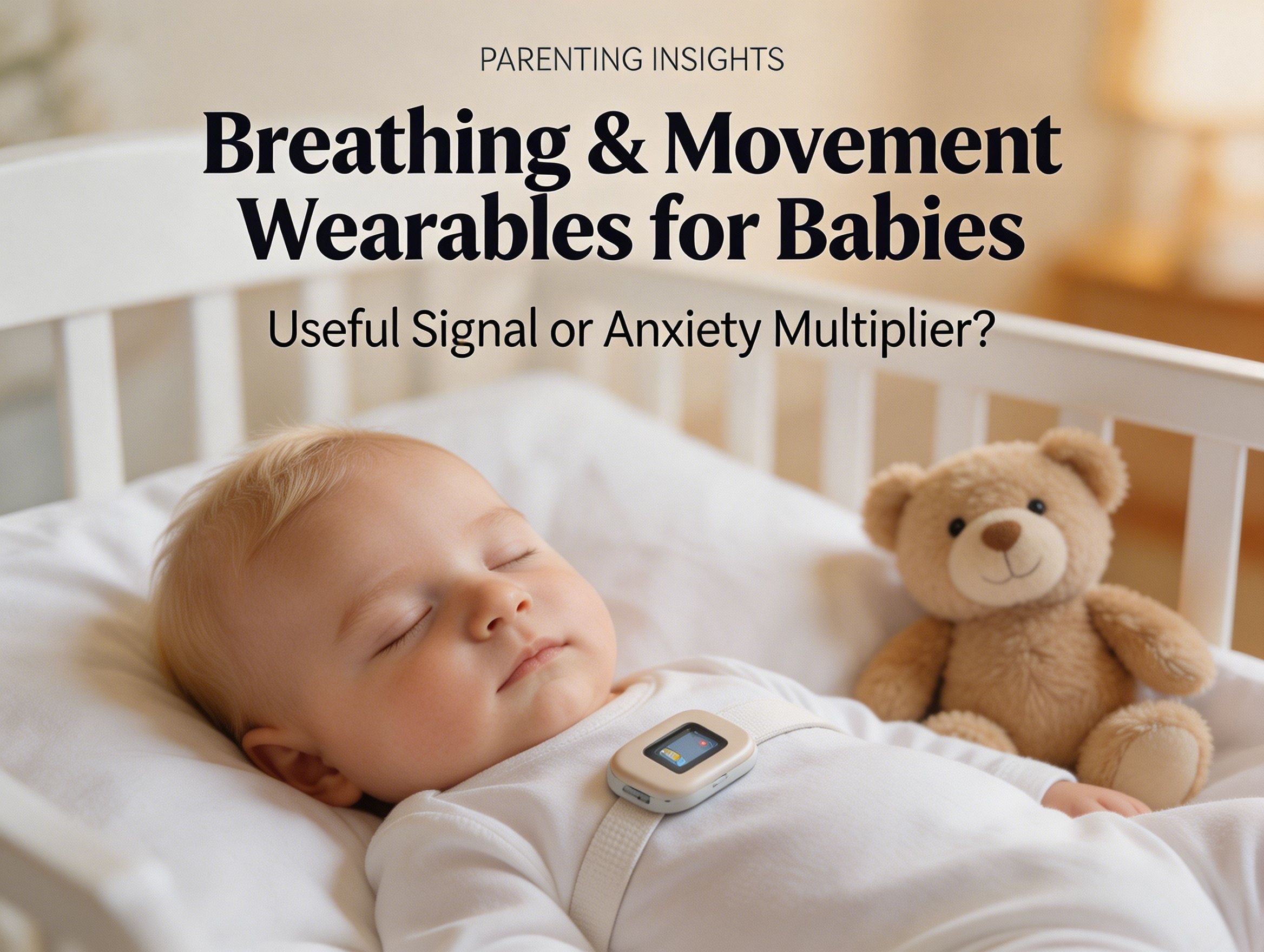
Infant wearables promise peace of mind by tracking breathing, movement, or oxygen-related signals. In practice, parent experience often depends less on the sensor itself and more on alert quality + interpretation clarity.
Bottom line first
- Wearables may provide structured overnight data for some families.
- They can also increase stress when false alerts are frequent or poorly explained.
- They should never replace safe sleep practices or prompt delays when a baby appears unwell.
What evidence and regulators highlight
Public-health and regulatory sources repeatedly caution that:
- consumer monitoring claims can exceed real clinical utility
- unauthorized vital-sign products can generate inaccurate readings
- no consumer monitor should be treated as a SIDS-prevention device
This is the critical framing for purchase decisions.
Practical pros and cons
Potential upsides
- timestamped event logs for trend discussions with caregivers
- structured check routines for overnight anxiety management
- useful context in select high-alert households (with realistic expectations)
Common downsides
- false positives that trigger repeated nighttime disruptions
- false reassurance from “normal-looking” dashboard data
- unclear escalation pathways after alarms
- high cost with uncertain incremental benefit
Decision rubric before buying
Ask these 6 questions:
- What exact problem are we solving (not just “general worry”)?
- Can we tolerate occasional false alarms without panic spirals?
- Do we have a clear action script for alerts?
- Are we using this as an add-on, not as a safety substitute?
- Is the product regulatory status transparent?
- Does this fit our budget better than simpler, lower-noise setups?
Who may benefit most
- families who use monitoring data as one input, not a diagnosis
- caregivers aligned on alert response protocol
- households willing to tune notification settings carefully
Who should be cautious
- parents already experiencing severe sleep-related anxiety
- families expecting “no-risk guarantee” from consumer tech
- households without shared understanding of alert limitations
Final review verdict
Wearables can be useful in narrow contexts, but they are frequently oversold. For many families, improving sleep environment consistency and choosing lower-noise monitoring may offer better overall outcomes.
References
- FDA Safety Communication (2025): Do Not Use Unauthorized Infant Devices for Monitoring Vital Signs
- FDA: Recommendations for Parents/Caregivers About Baby Products
- AAP (Pediatrics): Evidence Base for 2022 Updated Recommendations
- NICHD Safe to Sleep: FAQ
- JAMA: Accuracy of Pulse Oximetry-Based Home Baby Monitors
- CDC: Helping Babies Sleep Safely
- HealthyChildren (AAP): A Parent’s Guide to Safe Sleep