
Breastfeeding & Bottle Basics: Pumps, Storage Bags, and How to Tell Baby Is Getting Enough
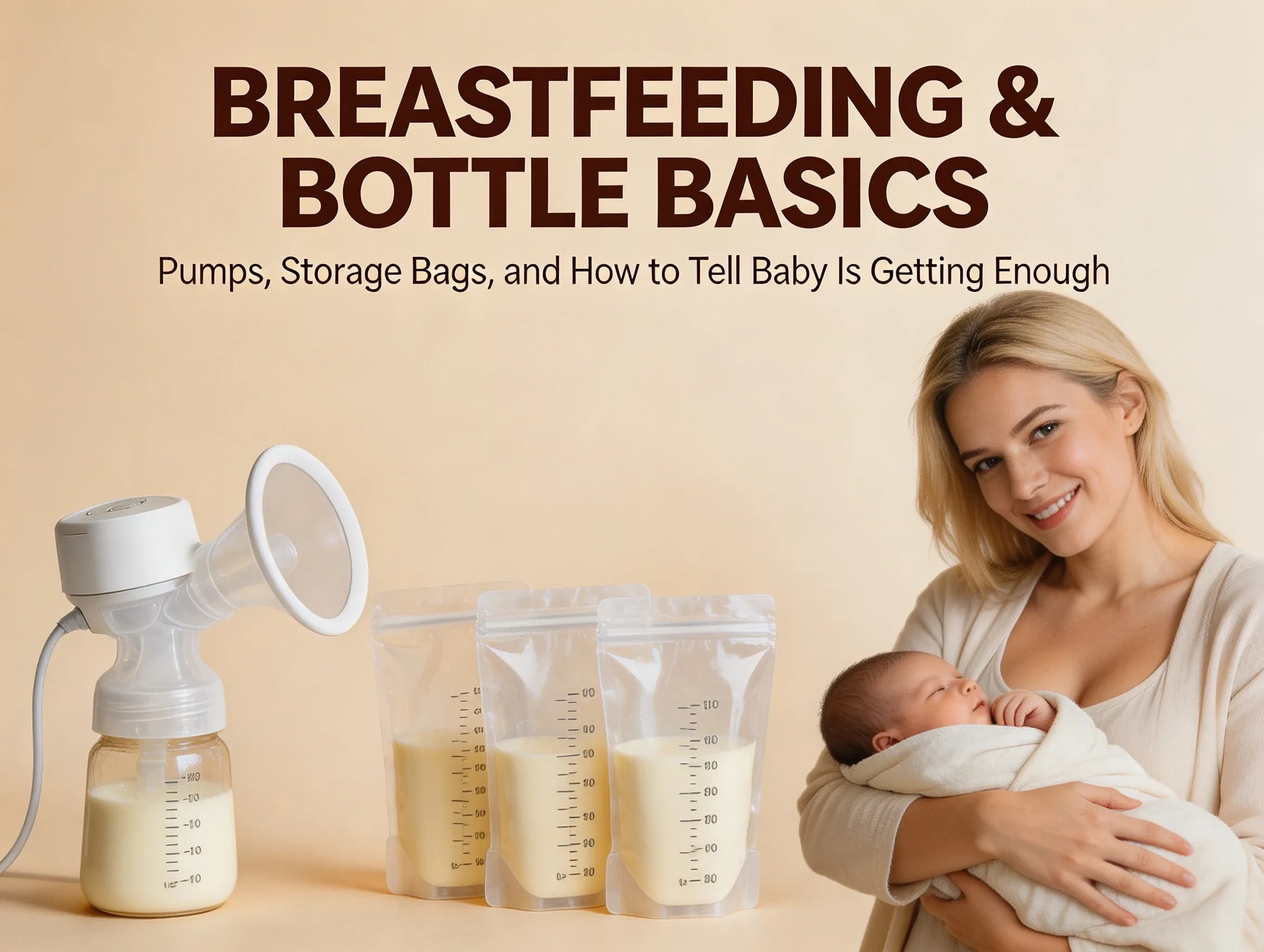
- Published on
- //7 mins read/––– views
Feeding a baby is often less about choosing one “perfect” method and more about building a safe, sustainable system that works in real life.
Parents usually need answers to three practical questions:
- Which pump and milk storage setup is actually worth using?
- How do I combine breastfeeding and bottle feeding without chaos?
- How can I tell if my baby is truly getting enough milk?
This guide gives a science-led, parent-practical framework for overseas families using breastfeeding, bottle feeding, or mixed feeding.
What the major guidelines agree on
Across WHO, CDC, AAP, NHS, and ACOG guidance, the core message is consistent:
- breastfeeding is strongly recommended when possible
- safe alternatives and mixed-feeding plans are valid when needed
- feeding success is measured by baby outcomes (growth, hydration, development), not guilt-based ideals
A realistic goal is safe, responsive, and sustainable feeding.
Breastfeeding and bottle feeding can coexist
Mixed feeding is common in the first year, especially when families manage return-to-work timelines, supply fluctuations, latch challenges, NICU history, or caregiver sharing.
What helps most:
- keep feeding decisions responsive to baby growth and cues
- avoid abrupt daily strategy changes
- use consistent milk handling and bottle techniques across caregivers
Deep pump evaluation: how to choose the right breast pump
There is no universal “best pump.” Choose by your use case, not social media popularity.
Pump type comparison
Manual pump
- Best for: occasional expression, emergency backup
- Pros: low cost, portable, quiet
- Limits: labor-intensive for frequent pumping
Single electric pump
- Best for: light-to-moderate regular pumping
- Pros: easier than manual, smaller setup
- Limits: slower than double pumping for high-demand schedules
Double electric pump
- Best for: frequent pumping, return-to-work, supply support plans
- Pros: time-efficient, often stronger consistency
- Limits: higher cost, larger setup
Wearable pump
- Best for: mobility needs and short pumping windows
- Pros: convenience, reduced setup friction
- Limits: fit and output can vary by breast shape and product design
Pump scorecard (practical buying matrix)
When comparing pumps, score each option 1-5 on:
- flange fit options and sizing support
- comfort across suction levels
- output consistency over 1-2 weeks
- cleaning complexity and part durability
- portability/noise for your daily environment
- warranty and replacement-part availability
Pick the model with highest real-life usability, not highest ad visibility.
Pumping quality checklist (more important than brand)
- confirm flange fit (too large/small reduces comfort and transfer)
- pump often enough for your goal and stage
- replace worn valves/membranes on schedule
- clean and sanitize pump parts per CDC guidance
- track trend, not one session output
Milk storage bags: deep evaluation before you buy
Storage bags are not equal in reliability. Focus on safety and leak performance.
Storage bag quality criteria
Use this checklist:
- food-safe material and clear manufacturer specs
- secure double-zip or reinforced seal
- accurate fill marks (do not overfill)
- stands/freezes flat for space and thawing convenience
- legible labeling area for date/time/volume
- low leak rate during freeze-thaw cycles
Common storage mistakes
- filling bags to maximum line before freezing (expansion leak risk)
- mixing warm fresh milk directly with already chilled milk without following guidance
- forgetting label discipline (date-first rotation fails quickly)
- repeated container transfers that increase contamination risk
Breast milk storage basics (follow latest CDC chart)
Always verify with the current CDC table, but families typically organize around:
- short room-temperature windows for freshly expressed milk
- fridge storage for near-term use
- freezer storage for longer-term reserve
- clear rules for thawed milk timing and non-refreezing
When in doubt, default to conservative handling.
How to tell if baby is getting enough milk
This is the highest-anxiety question for most families.
Use pattern indicators, not one feed.
During-feeding indicators
- coordinated sucking-swallowing with visible pauses
- baby appears engaged, then gradually relaxes
- reduced hunger intensity by the end of feed
Daily/weekly indicators
- age-appropriate wet diaper output trends
- stool pattern evolving with age and feeding type
- steady weight-gain trajectory on pediatric follow-up
- baby generally alert and developmentally engaged between feeds
Satiety cues to stop feeding
- slowing or stopping sucks
- turning head away / pushing nipple out
- relaxed hands/body posture
- loss of active interest in feeding
Respecting satiety cues helps reduce overfeeding risk, especially with bottle feeding.
Bottle technique that supports responsive feeding
Paced, cue-based bottle feeding can help align bottle intake with infant self-regulation.
Practical steps:
- hold baby semi-upright
- keep bottle angle controlled (not rapid continuous flow)
- pause regularly to allow breathing and satiety signaling
- switch sides during feed for symmetry and interaction
- stop when fullness cues are clear
Feeding plan example for mixed-feeding families
A sustainable system often includes:
- direct breastfeeding sessions when feasible
- planned pump sessions tied to schedule needs
- labeled milk rotation (oldest safe milk first)
- shared caregiver bottle method with same cue-based approach
Consistency across caregivers usually improves outcomes faster than frequent strategy changes.
What parents often misunderstand
Misunderstanding 1: “More pumping always means better supply”
Not always. Technique, timing, flange fit, rest, and clinical factors all matter.
Misunderstanding 2: “If baby finishes bottle fast, baby must still be hungry”
Flow rate can drive fast intake. Use satiety cues, pace, and post-feed behavior.
Misunderstanding 3: “Storage bags are interchangeable”
Seal reliability and handling performance vary significantly by product design.
Misunderstanding 4: “One low-output pump session means supply failure”
Single-session variability is common. Evaluate trends across several days.
When to contact your pediatric clinician or lactation professional
Seek support if you notice persistent concerns such as:
- poor weight gain or hydration concerns
- pain, latch difficulty, or repeated feeding distress
- very low output trend despite optimized pumping setup
- ongoing vomiting, blood in stool, or feeding intolerance signs
- severe caregiver burnout affecting safe feeding consistency
Early support often prevents larger feeding complications.
FAQ
Is mixed feeding okay for long-term development?
Yes. Many infants thrive with mixed feeding when intake is safe, sufficient, and monitored.
Do I need an expensive pump for good outcomes?
Not necessarily. Fit, routine, and cleaning quality often matter more than premium branding.
Are milk storage bags better than reusable containers?
Both can work. Choose based on safety specs, handling reliability, and your workflow.
What is the simplest way to monitor “enough milk”?
Track diaper output, feeding behavior, and weight trend together—not one signal alone.
References
- WHO: Infant and young child feeding fact sheet
- WHO: Breastfeeding health topic
- UNICEF Data: Breastfeeding
- CDC: Breast milk storage and preparation
- CDC: Clean and sanitize breast pump parts
- AAP HealthyChildren: How to tell if breastfed baby is getting enough milk
- AAP HealthyChildren: Responsive feeding explained
- AAP HealthyChildren: Amount and schedule of formula feedings
- NHS: Expressing and storing breast milk
- NHS: Bottle feeding advice
- ACOG: Breastfeeding challenges
- PubMed (2024): Pump use and breastfeeding duration
- PubMed (2024): Paced bottle-feeding interaction outcomes
- ABM Clinical Protocol #3: Supplementary feedings in healthy term breastfed neonates
Final takeaway
The best feeding system is not “breast only” or “bottle only.” It is the plan your family can sustain safely: right pump fit, reliable milk storage workflow, responsive bottle technique, and clear tracking of baby intake and growth over time.