
Early Pregnancy: A Practical First Trimester Guide
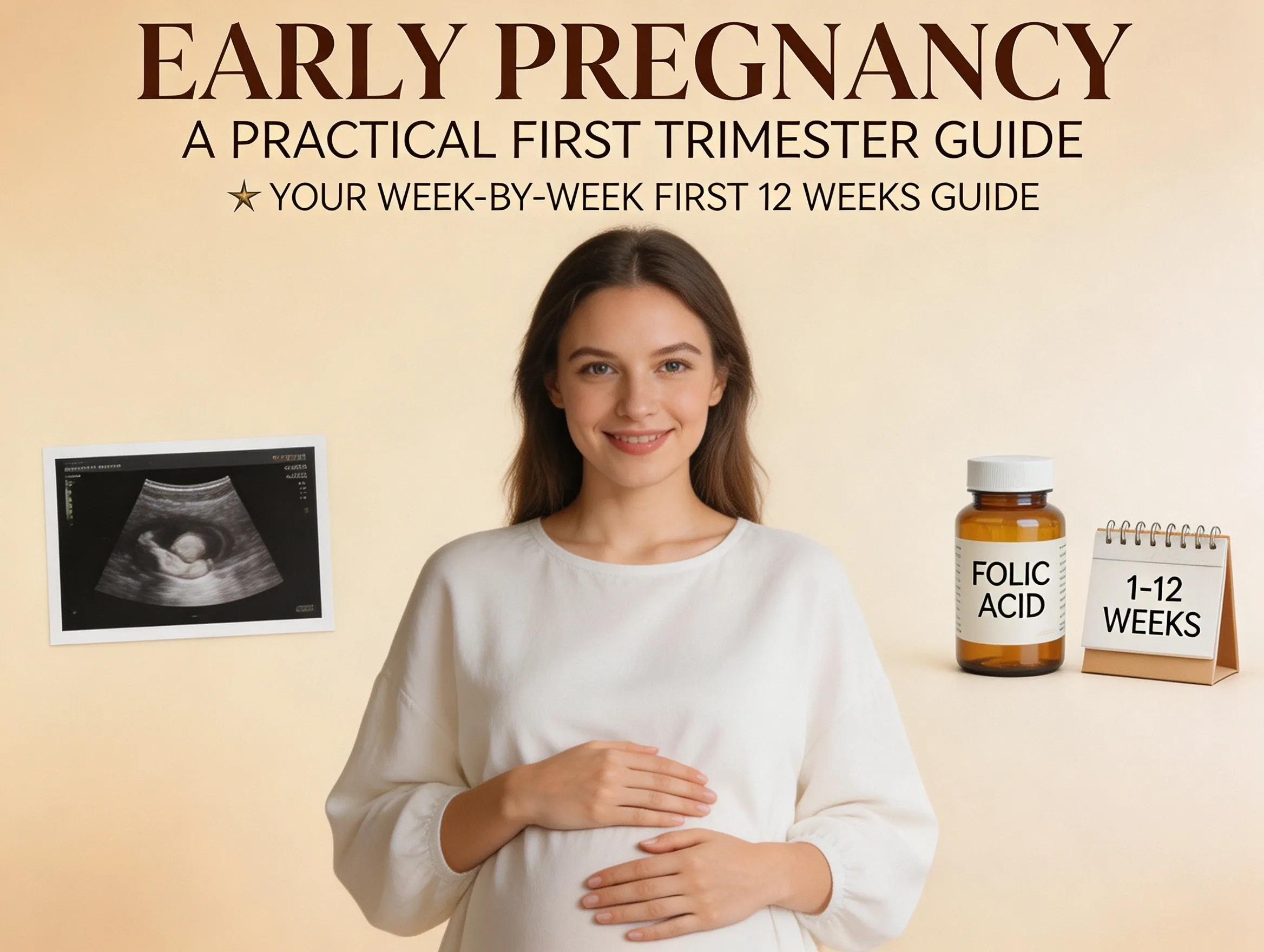
- Published on
- //6 mins read/––– views
Pregnancy can feel intensely emotional in the first few weeks: relief, excitement, uncertainty, and worry can all show up in the same day. If you are in early pregnancy, you do not need perfect routines. You need clear next steps, reliable information, and a calm way to decide what matters now.
This first trimester guide focuses on exactly that.
What the first trimester covers
The first trimester usually means week 1 through week 13 of pregnancy. During this period, your body adapts quickly through hormonal and metabolic changes, and symptoms can shift from day to day.
Not everyone experiences early pregnancy the same way. Severe nausea can happen, mild symptoms can happen, and both can still be within a normal range. A symptom pattern that looks different from someone else’s does not automatically mean something is wrong.
Common first trimester symptoms (and what is usually normal)
Many people notice at least some of these:
- nausea or vomiting (often called morning sickness, though it can happen any time)
- fatigue
- breast tenderness
- bloating or constipation
- frequent urination
- mood changes
- mild cramping
Two important points help reduce anxiety:
- Symptoms can fluctuate. A "better" day does not necessarily mean a problem.
- Symptom intensity is not a score of pregnancy health.
What to do in early pregnancy: a practical checklist
1) Book prenatal care early
Arrange your first prenatal appointment as soon as practical. Early care helps confirm timeline, review your medical history, and set a plan for screening, supplements, and risk factors.
2) Start (or continue) prenatal vitamins
Most guidelines emphasize folic acid before conception and in early pregnancy because early neural development begins very early. If you are unsure about dose or product, ask your clinician instead of self-adjusting aggressively.
3) Review medications and supplements
Do not assume all over-the-counter products are pregnancy-safe. Bring a full list (prescriptions, supplements, herbs) to your provider for review.
4) Protect hydration and basic nutrition
If nausea affects appetite, aim for manageable intake rather than perfection: small frequent meals, fluids through the day, and gentle foods that you tolerate.
5) Keep one running question list
A simple note on your phone can lower stress and improve appointments. Add questions as they arise instead of trying to remember everything in clinic.
Early pregnancy trends (2024-2026) that matter to readers
Recent maternal-health updates and clinical guidance emphasize a few practical shifts:
- More focus on starting prenatal care in the first trimester where possible, because delayed initiation is associated with poorer outcomes at population level.
- Growing use of tailored prenatal care models, rather than one-size-fits-all visit patterns, while still protecting core evidence-based milestones.
- Stronger attention to maternal well-being beyond delivery, including continuity from pregnancy into postpartum health.
- Increased public-health concern about equity gaps in access to timely prenatal care.
- Continued prioritization of trusted, source-backed pregnancy advice because misinformation spreads quickly in social media spaces.
What people often misunderstand in first trimester care
Misunderstanding 1: "If nausea is bad, the pregnancy is healthy; if nausea is mild, something is wrong"
Reality: nausea patterns vary widely. Symptom severity alone cannot diagnose pregnancy status.
Misunderstanding 2: "If spotting happens, it always means miscarriage"
Reality: light spotting can have multiple causes, but any bleeding should be discussed with a qualified clinician for individualized advice.
Misunderstanding 3: "Natural supplement means safe in pregnancy"
Reality: "natural" is not a pregnancy safety label. Safety depends on ingredient, dose, timing, and medical context.
Misunderstanding 4: "I can wait until later for prenatal care if I feel fine"
Reality: feeling fine is good, but early prenatal contact supports screening, medication review, and prevention decisions that work best when done early.
When to seek medical care urgently
Contact urgent care or emergency services based on local guidance if you have:
- heavy vaginal bleeding
- severe abdominal pain (especially one-sided or worsening)
- persistent vomiting with inability to keep fluids down
- fainting, severe dizziness, or signs of dehydration
- fever or any sudden severe symptom that feels unsafe
If in doubt, it is better to seek professional assessment early than to self-triage for too long.
How to evaluate online pregnancy advice quickly
Use this fast fact-check method before trusting a claim:
- Source quality: Is it from recognized health authorities or peer-reviewed research?
- Date: Is it current enough to reflect recent recommendations?
- Specificity: Does it provide actionable detail, not just fear-based or absolute language?
- Safety framing: Does it clearly state when to seek medical care?
- No overclaim: Does it avoid guaranteed outcomes and miracle wording?
A calmer framework for the first trimester
Think in layers, not perfection:
- Safety layer: know red flags and who to call.
- Care layer: schedule prenatal care and medication review.
- Daily layer: sleep, hydration, manageable meals, realistic workload.
- Support layer: ask for practical help early.
Early pregnancy is not a test you pass by doing everything at once. It is a transition you move through with good information and timely care.
FAQ
Is it normal for first trimester symptoms to change from day to day?
Yes. Symptom fluctuation is common. Rapid change alone is not enough to diagnose a problem, but severe or concerning symptoms should be evaluated.
What is the first action after a positive pregnancy test?
Arrange prenatal care and begin a medication/supplement review. This creates a safe plan early.
Do I need to panic if my symptoms are mild?
No. Symptom intensity varies widely between individuals. Focus on follow-up care and red-flag awareness rather than comparing yourself with others.
References
- WHO: WHO recommendations on antenatal care for a positive pregnancy experience
- WHO IRIS guideline PDF: WHO recommendations on antenatal care for a positive pregnancy experience
- CDC: NCHS Data Brief No. 550 (2026) — Changes in Timing of Prenatal Care Initiation, 2021–2024
- CDC: Screening and testing in pregnancy (HIV, viral hepatitis, STD, TB)
- NHS: 1st trimester week-by-week guide
- NHS: Signs and symptoms of pregnancy
- ACOG: Morning sickness—nausea and vomiting of pregnancy (FAQ)
- ACOG Clinical Consensus (2025): Tailored prenatal care delivery for pregnant individuals
- UNICEF DATA: Maternal and newborn health coverage dataset (2024)
- Journal of Midwifery & Women’s Health (PubMed): Scoping review on first-trimester prenatal care initiation factors
Final takeaway
In the first trimester, the most useful strategy is simple: start prenatal care early, use trustworthy sources, avoid overinterpreting day-to-day symptom changes, and escalate quickly when red flags appear.