
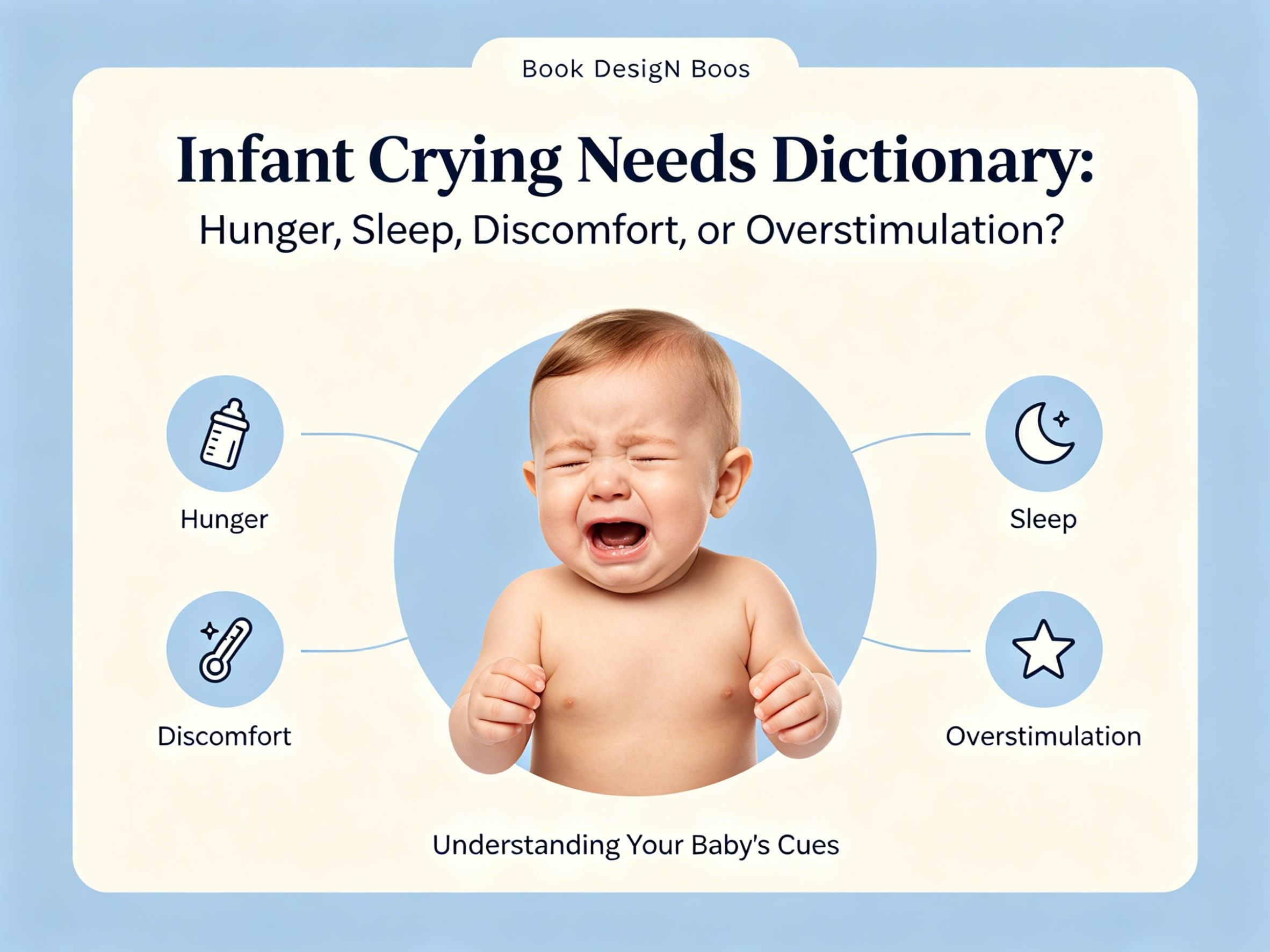
Infant Crying Needs Dictionary: Hunger, Sleep, Discomfort, or Overstimulation?
- Published on
- //3 mins read/––– views
Parents often ask, “What is this cry trying to say?” While no single sound is a perfect diagnostic tool, babies do show patterns that help caregivers respond faster and more effectively.
This guide gives a practical “needs dictionary” for common crying triggers: hunger, tiredness, discomfort, and overstimulation.
First principle: decode patterns, not one sound
Crying interpretation works best when combining:
- timing (when cry starts)
- body signals (hands, posture, movement)
- context (last feed/sleep/diaper/activity)
- response trend (what calms or worsens)
One isolated cry is less informative than repeated context patterns.
Pattern 1: hunger-related crying
Common clues:
- rooting/sucking motions
- hand-to-mouth behavior
- escalating fuss if feeding is delayed
Response:
- offer feed in a calm setting
- use responsive pacing
- reassess after burp/position change
Pattern 2: sleep-related crying
Common clues:
- eye rubbing, yawning, zoning out
- fuss spikes near usual wake-window limits
- harder settling when overtired
Response:
- reduce stimulation quickly
- use short predictable wind-down
- prioritize early settling before full escalation
Pattern 3: discomfort-related crying
Common clues:
- wet/soiled diaper signs
- temperature discomfort (too hot/cold)
- gas/reflux-like body tension
- clothing/tag/friction irritation
Response:
- run a quick comfort checklist
- change one variable at a time
- monitor if symptom repeats across feeds/sleeps
Pattern 4: overstimulation crying
Common clues:
- turning away from faces/lights
- stiff body, arching, escalating fuss
- difficulty calming in noisy settings
Response:
- lower light/noise immediately
- hold close, slow voice and movement
- pause activities and allow recovery
60-second crying triage script
When crying starts, ask:
- When did baby last feed?
- How long since last sleep?
- Diaper/temperature/position okay?
- Recent stimulation load high?
- Any illness red flags present?
This script reduces panic and improves response speed.
Caregiver response loop (repeatable)
Use a four-step loop:
- observe
- respond
- reassess
- record pattern
Pattern notes over 3-5 days are highly useful for pediatric discussions.
What not to assume
Myth 1: “This exact cry always means one thing”
Cry sounds can overlap. Context matters more.
Myth 2: “If baby keeps crying, caregiver is failing”
Some crying persists despite correct care. Focus on safe, responsive support.
Myth 3: “More stimulation will distract every cry”
For many babies, overstimulation worsens distress.
Myth 4: “If crying stops once, issue is solved permanently”
Track trends; recurring patterns may need different strategies.
When to seek medical advice
Seek professional guidance when crying is persistent with concerning signs such as:
- feeding decline
- fever or illness features
- breathing concerns
- low urine output/dehydration concern
- unusual lethargy or reduced responsiveness
- caregiver concern that remains high despite troubleshooting
FAQ
Can parents truly identify cry types accurately?
You can often identify useful pattern categories, but not perfect one-to-one meanings.
Should I respond immediately or wait?
In early infancy, responsive caregiving is generally recommended.
Does frequent crying always mean colic?
No. Many causes are possible; evaluate context and red flags.
What helps most long-term?
Consistent observation, responsive routines, and early escalation when concern patterns persist.
References
- HealthyChildren: Responding to your baby’s cries
- HealthyChildren: How to calm a fussy baby
- NHS: Soothing a crying baby
- NHS: Understanding your baby
- WHO: Nurturing care
Final takeaway
You do not need to “translate” every cry perfectly. A context-based pattern approach—feed, sleep, comfort, stimulation, red flags—helps caregivers respond faster, calmer, and safer.