
Infant Crying Red Flags: When to Seek Urgent Medical Care
- Published on
- //3 mins read/––– views
Most infant crying is benign and developmentally expected. The challenge for parents is knowing when crying may signal medical urgency.
This guide focuses on escalation thresholds so families can act quickly and safely.
Baseline: what is often normal
Normal crying patterns may include:
- evening fussier periods
- crying that improves with feeding/holding/settling
- short episodes without illness signs
Even when normal, crying can be intense. Use support and structured routines.
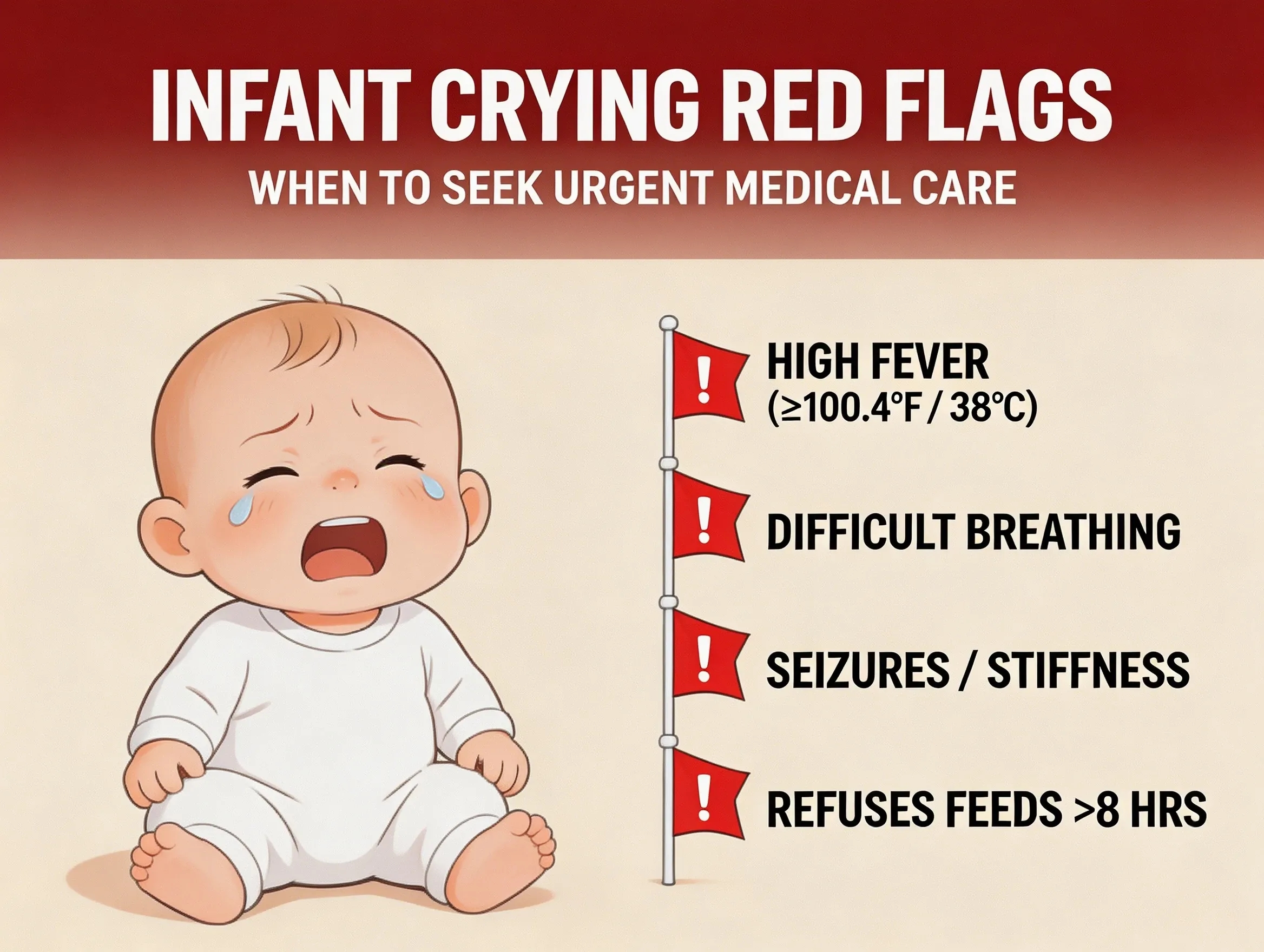
Red flags that require urgent escalation
Seek urgent or emergency care if crying occurs with:
- breathing difficulty or color change
- reduced responsiveness or unusual lethargy
- fever concerns based on infant age and local guidance
- repeated vomiting with poor hydration signs
- seizure-like activity
- signs of injury or sudden severe inconsolable crying with alarming behavior change
If in doubt, treat as urgent and contact emergency services/urgent care.
Same-day clinical review indicators
Arrange same-day advice if you see:
- persistent inconsolable crying despite troubleshooting
- reduced feeding across multiple feeds
- fewer wet diapers or dehydration concern
- concerning rash, diarrhea, or illness pattern
- caregiver feeling that baby is “not right” repeatedly
Parental concern is a valid clinical signal.
Age matters in triage
Younger infants require lower thresholds for medical review.
Do not delay help-seeking in early infancy when symptoms are unclear or persistent.
Structured call script for parents
When calling clinician/urgent line, report:
- baby age
- duration/pattern of crying
- feeding and wet diaper trend
- temperature and other symptoms
- what soothing steps already tried
This helps triage teams make safer decisions quickly.
Prevent caregiver harm during prolonged crying
Intense crying raises caregiver stress and accidental harm risk.
If overwhelmed:
- place baby safely in crib
- step away briefly
- call support
- return when calmer
Never shake a baby.
Common misconceptions
Misconception 1: “If baby stops crying once, danger is gone”
Concerning conditions can fluctuate.
Misconception 2: “I should wait for clear diagnosis before calling”
No—use red flags and escalation thresholds.
Misconception 3: “Calling too early is overreacting”
In infants, early triage is usually safer.
Misconception 4: “All persistent crying is colic”
Persistent crying may have multiple causes and needs evaluation when warning signs appear.
FAQ
What if I am unsure whether it is urgent?
Choose the safer path and seek urgent guidance.
Does normal colic ever need emergency care?
Yes, if red-flag symptoms are present.
Should I record videos/notes before calling?
If safe and feasible, concise notes help triage.
What is the biggest mistake to avoid?
Delaying care when persistent crying is combined with illness signs.
References
- HealthyChildren: Crying baby symptom checker (before 3 months)
- HealthyChildren: Crying child symptom checker (3 months+)
- NHS: Colic
- NHS: Soothing a crying baby
- AAP: Abusive head trauma
- HealthyChildren: AAP updates policy on abusive head trauma
Final takeaway
Most crying is normal, but persistent crying plus warning signs needs fast escalation. Use clear red-flag thresholds, call early when concerned, and prioritize caregiver and infant safety.