
The Science of Naps: Infant Daytime Sleep Cycles and How to Prevent Overtiredness
- Published on
- //7 mins read/––– views
Infant daytime sleep is often where family stress peaks first. Nights may get all the attention, but naps drive mood regulation, feeding quality, and bedtime stability.
Parents are usually told two conflicting messages: "follow strict wake windows" and "just follow cues." In practice, healthy nap management sits in the middle: science-informed structure plus baby-specific flexibility.
This guide explains how infant daytime sleep cycles work, what overtiredness really looks like, and how to build realistic nap routines for 0-12 months.
Why nap science matters in the first year
Daytime sleep is not "extra" sleep. It is part of a 24-hour regulation system tied to:
- emotional regulation and settling ability
- feeding quality and energy balance
- caregiver-child interaction quality
- nighttime sleep pressure and bedtime success
Public-health guidance emphasizes total daily sleep and safe sleep conditions, including naps.
How infant daytime sleep cycles work
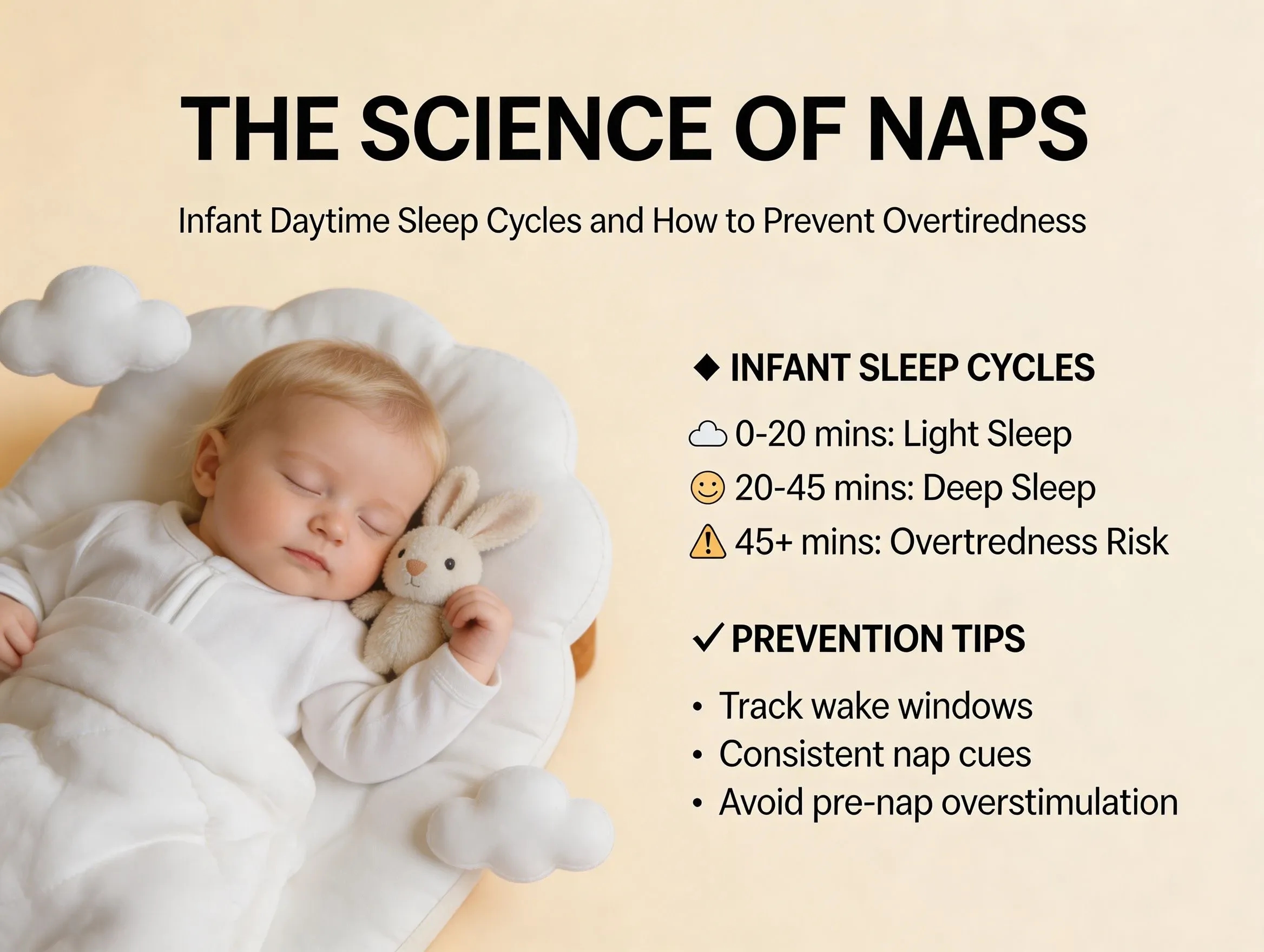
Infant sleep cycles are shorter than adult cycles. In early infancy, many naps naturally end after one short cycle. This is normal, not immediate evidence that something is wrong.
What changes over time:
- 0-3 months: highly variable cycles and irregular nap timing
- 4-6 months: circadian organization strengthens; nap timing often becomes more predictable
- 6-12 months: longer consolidated naps become more common, though short naps still occur
Practical point: one short nap does not define the day. Pattern across 1-2 weeks is more useful than a single difficult day.
Age-by-age nap pattern expectations (0-12 months)
0-3 months: regulation first, schedule second
What is common
- multiple short naps across the day
- inconsistent wake periods
- sleep strongly linked to feeding and soothing cycles
Parent priority
- prioritize safe sleep setup for every sleep
- use simple day-night light cues and calm pre-nap routines
- avoid forcing a rigid clock schedule too early
4-6 months: pattern building phase
What is common
- 3-4 naps for many infants
- clearer sleepy cues before nap windows
- occasional short naps during developmental leaps
Parent priority
- build repeatable pre-nap routine (5-10 minutes)
- use age-appropriate wake ranges as guidance, not strict deadlines
- prevent long wake stretches late in the day
7-9 months: consolidation and transition pressure
What is common
- movement toward 2-3 naps
- stronger sleep pressure patterns
- overtiredness spikes when late naps are missed
Parent priority
- protect the first two naps when possible
- anchor wake-up time and bedtime within a consistent range
- use brief rescue naps when needed instead of letting exhaustion accumulate
10-12 months: two-nap stability in many babies
What is common
- two naps for many infants, with variability
- stronger resistance to one nap or bedtime if daytime timing drifts
- developmental milestones (standing/walking/language bursts) temporarily affecting naps
Parent priority
- keep routine predictable while allowing short-term flexibility
- avoid dropping to one nap too early unless pattern evidence is clear over time
- protect total 24-hour sleep, not just one nap length
How to recognize overtiredness (vs normal variability)
Overtiredness usually means wake time has exceeded the baby’s current tolerance repeatedly, not just once.
Common signs:
- escalating fussiness before or during nap attempts
- harder settling despite obvious fatigue
- short fragmented naps with distressed wake-ups
- second-wind behavior (hyper-alert, wired, harder bedtime)
Not every short nap means overtiredness. Look for repeated multi-day patterns.
A practical anti-overtiredness framework
1) Use wake windows as ranges, not rigid rules
Wake windows are useful planning tools, but infants are not clocks. Adjust for:
- illness or recovery days
- high-stimulation days (travel, visitors, novel environments)
- developmental leap periods
2) Combine cues + clock + context
Use three signals together:
- Cue: rubbing eyes, zoning out, reduced engagement
- Clock: approximate wake-time range
- Context: quality of prior naps and current stimulation load
3) Build a short, repeatable wind-down
A predictable 5-10 minute routine helps reduce arousal:
- dimmer environment
- reduced stimulation
- consistent sleep phrase/song
- safe sleep positioning
4) Use rescue strategy early
If an early nap is missed or very short:
- offer a short bridge nap when feasible
- move bedtime earlier when needed
- do not repeatedly "stretch" wake windows to force schedule perfection
5) Protect safe sleep in every nap attempt
For all sleeps (day and night), follow safety guidance: back sleeping position, firm flat surface, and a clear sleep space.
Common nap myths that increase family stress
Myth 1: "A good nap schedule means exact clock times every day"
Infants need structure, but biologic variability is expected.
Myth 2: "If baby fights a nap, they are not tired"
Nap resistance can also reflect overtiredness or overstimulation.
Myth 3: "Skipping daytime naps improves night sleep"
In many infants, excessive daytime wakefulness worsens bedtime and night settling.
Myth 4: "One bad nap day means the routine failed"
Interpret trends over several days before making major schedule changes.
When to discuss infant sleep with your pediatric clinician
Seek pediatric advice if you notice persistent concerns such as:
- ongoing poor growth/feeding combined with major sleep difficulties
- loud breathing, pauses in breathing, or concerning breathing patterns during sleep
- frequent severe distress with nearly every sleep attempt over time
- persistent reversal of day-night pattern beyond expected developmental windows
- caregiver exhaustion affecting safety and daily functioning
Sleep guidance should always be individualized when medical or developmental concerns are present.
Parent quick-check before changing a nap routine
- Has this pattern persisted for at least 5-7 days?
- Are we changing too many variables at once?
- Is the sleep environment safe and low-stimulation?
- Are we balancing cues, clock timing, and context?
- Do we need pediatric input before making bigger changes?
FAQ
How many naps should my baby take?
It varies by age and individual development. Focus on total 24-hour sleep quality, daytime function, and trend patterns.
Are wake windows evidence-based?
Wake windows are practical tools, but should be used as flexible ranges, not rigid rules.
Does a short nap always need nap training changes?
No. Short naps can be developmentally normal, especially in younger infants.
What is the fastest way to reduce overtiredness?
Respond early to repeated fatigue patterns: shorten wake windows slightly, protect a rescue nap if needed, and use an earlier bedtime when appropriate.
References
- CDC: Positive Parenting Tips (Infants) — sleep duration including naps
- CDC: Helping Babies Sleep Safely
- CDC: Sleep Safely for Babies (SUID)
- AAP HealthyChildren: How to Keep Your Sleeping Baby Safe
- AAP HealthyChildren: Getting Your Baby to Sleep
- AAP/AASM: Recommended sleep duration ranges for children
- NHS: Your baby’s sleep patterns
- NHS: Helping your baby to sleep
- WHO: Guidelines on physical activity, sedentary behaviour and sleep for children under 5 years
- WHO: Sleep safety for newborns and children under 5
- PubMed (2024): Daytime sleep duration in infancy and cognitive development at school age
- PubMed (2024): Physiological changes in sleep regulation across infancy and young childhood
- PubMed (2024): Infant sleep characteristics and childhood cognitive outcomes
Final takeaway
Nap management works best when parents combine evidence-based safety, flexible routine structure, and pattern tracking over time. The goal is not perfect naps every day, but a stable 24-hour rhythm that protects infant regulation and family wellbeing.