
After a Choking Event: What to Monitor, When to Reassess, and How to Prevent Recurrence
- Published on
- //3 mins read/––– views
When a choking event ends, many families feel relief—and then uncertainty about what comes next.
Post-event care matters. Some children need medical reassessment even after apparent recovery, and households should proactively prevent recurrence.
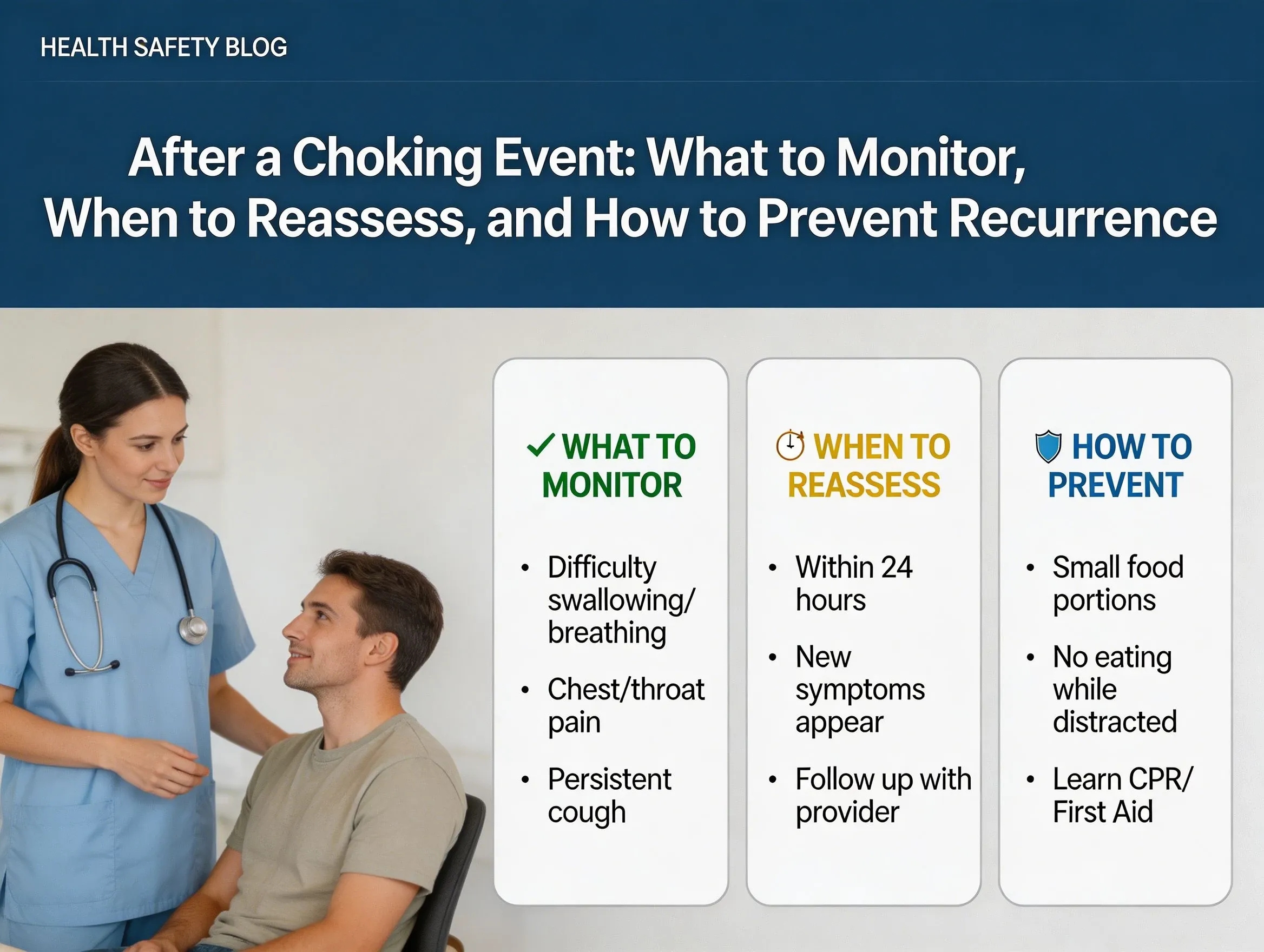
Immediate post-event monitoring window
Observe for:
- persistent cough
- noisy breathing/stridor-like sounds
- breathing effort changes
- feeding difficulty after event
- unusual fatigue or distress
Any persistent respiratory concern deserves prompt clinical review.
When urgent reassessment is needed
Seek urgent care if:
- breathing remains difficult/noisy
- child appears unwell or less responsive
- repeated vomiting or distress occurs
- there was any period of unresponsiveness
- caregivers are uncertain whether airway is fully clear
Uncertainty after airway events should favor early medical evaluation.
What to document after the incident
Create a brief event note:
- suspected object/food
- time and context
- symptoms observed
- interventions used
- recovery timeline and ongoing symptoms
This improves follow-up quality and prevention planning.
Recurrence prevention: 3-layer system
Layer 1: food safety redesign
- modify high-risk food shapes/textures
- seated supervised eating only
- avoid distracted feeding environments
Layer 2: environment control
- remove small objects from floor/play zones
- check toys for loose parts and age suitability
- review caregiver routines in car/stroller/visits
Layer 3: caregiver readiness
- all caregivers trained in choking first aid
- visible emergency contact card
- shared family protocol and regular refresh
Family debrief after incident
Hold a short debrief within 24-48 hours:
- what triggered incident
- what response worked
- what slowed response
- what prevention rule changes are needed now
This converts a crisis into a safer system.
Common mistakes after an event
Mistake 1: “It passed, so no need to monitor”
Persistent symptoms can appear after initial relief.
Mistake 2: “We only need to change one thing”
Recurrence prevention usually needs food + environment + training adjustments.
Mistake 3: “One trained adult in family is enough”
All frequent caregivers should know response basics.
Mistake 4: “No need to discuss event with childcare/grandparents”
Shared care contexts need updated safety protocols.
FAQ
How long should I watch my child after a choking event?
Monitor closely in the immediate period and seek review if symptoms persist or worsen.
Should I avoid all finger foods after choking?
Not necessarily—use safer preparation and supervision strategies.
Is follow-up needed if child looks completely normal?
If there was significant distress or uncertainty, follow-up is still prudent.
What reduces repeat risk most?
Consistent food-shape safety + supervised seated eating + caregiver first-aid readiness.
References
- NHS: How to stop a child from choking
- American Red Cross: Infant choking
- HealthyChildren: Choking prevention
- CDC: Choking hazards in infant/toddler foods
- CPSC: Toy small-parts choking hazard guidance
Final takeaway
Post-choking care is not just “crisis over.” Monitor symptoms, reassess early when uncertain, and implement a layered prevention system so the event is less likely to happen again.