
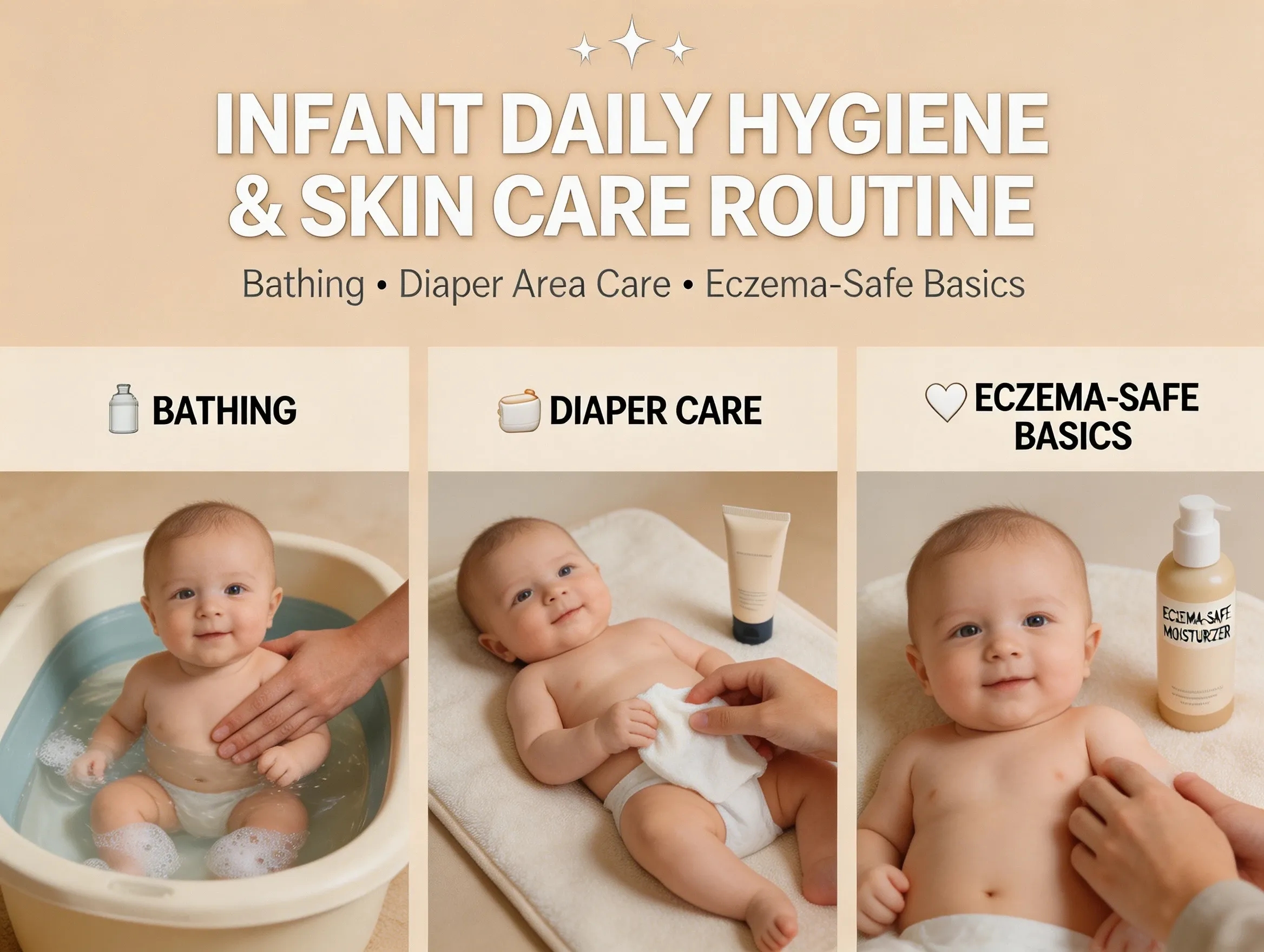
Infant Daily Hygiene & Skin Care Routine: Bathing, Diaper Area Care, and Eczema-Safe Basics
- Published on
- //4 mins read/––– views
Infant skin is thinner, more reactive, and easier to irritate than adult skin. Most daily problems—dryness, diaper rash, mild eczema flares—improve when families simplify routines instead of adding more products.
This guide gives a practical, low-friction daily hygiene system for babies in the first year.
The core principle: gentle + consistent beats complicated
A strong infant skin routine is usually:
- short and predictable
- low-fragrance and low-irritant
- responsive to skin changes (dry, red, oozing, rash)
- easy for all caregivers to follow
More products do not automatically mean better skin outcomes.
Bathing frequency: what is usually enough
Many infants do well with 2-3 baths per week plus daily spot cleaning (face, neck folds, diaper area, hands).
During warm weather, spit-up phases, or visible dirt/sweat, frequency can increase as needed.
Bath-time basics:
- keep water warm, not hot
- keep bath duration short
- avoid harsh soaps and heavy fragrance
- pat dry rather than vigorous rubbing
Daily hygiene routine (simple framework)
Morning
- clean face/neck folds with soft damp cloth
- check diaper area and skin folds for moisture retention
- apply moisturizer if skin is dry-prone
During diaper changes
- gentle cleanse (water or mild wipe strategy)
- allow skin to dry before new diaper
- barrier cream when irritation risk is high
- avoid overly tight diaper fit
Evening
- bath on scheduled days, otherwise spot clean
- moisturize within minutes after bath if dry/eczema-prone
- reassess skin for new rash, friction, or scratch marks
Diaper-area care: prevention first
Most diaper rash risk rises with prolonged moisture + friction + stool/urine exposure.
Prevention checklist:
- change diapers promptly when wet/soiled
- use a gentle cleaning method
- let skin dry before re-covering
- apply a protective barrier when skin is vulnerable
- use breathable, correctly sized diapers
If rash worsens despite routine care, or looks unusual, seek clinical input.
Eczema-prone skin: practical daily adjustments
For babies with eczema tendency:
- choose fragrance-free gentle cleansers
- moisturize consistently (not only when flare appears)
- avoid heavily fragranced lotions and detergents
- dress in soft breathable fabrics
- watch heat/sweat triggers and friction points
When flares persist, treatment plans should be clinician-guided.
Product selection: what to prefer, what to avoid
Prefer:
- fragrance-free, dye-free products
- shorter ingredient lists when possible
- products designed for infant-sensitive skin
Use caution with:
- strong fragrance and essential-oil-heavy products
- aggressive exfoliating/active ingredients
- frequent product switching that makes trigger tracking harder
One good cleanser + one suitable moisturizer + one barrier cream is often enough.
Common mistakes that trigger skin issues
Mistake 1: bathing too long with hot water
This can worsen dryness and barrier disruption.
Mistake 2: using too many new products at once
If irritation happens, you cannot identify the trigger.
Mistake 3: scrubbing diaper area aggressively
Friction can worsen rash severity.
Mistake 4: waiting too long to moisturize dry-prone skin
Routine preventive moisturizing often works better than flare-only response.
When to contact your pediatric clinician
Seek medical advice if you notice:
- rash with fever or unwell behavior
- weeping/crusting skin or suspected infection signs
- severe persistent diaper rash not improving
- eczema flare interfering with sleep or feeding comfort
- recurrent skin issues despite consistent gentle routine
Early care usually reduces prolonged discomfort.
FAQ
How often should I bathe my baby in the first year?
For many babies, 2-3 times weekly plus spot cleaning works well.
Do I need separate products for every body area?
Usually no. A minimal routine is often more skin-friendly and easier to sustain.
Is daily moisturizer needed if skin looks normal?
For eczema-prone babies, preventive moisturizing can help reduce flare frequency.
Are wipes always harmful?
Not necessarily. Gentle, fragrance-free options and proper drying can be well tolerated.
References
- NHS: Washing and bathing your baby
- NHS Best Start: Bathing your baby
- HealthyChildren: Bathing & Skin Care (baby)
- HealthyChildren: Eczema in babies and children
- HealthyChildren: How to treat and control eczema rashes
- HealthyChildren: Why is my baby always getting diaper rashes?
Final takeaway
Infant skin care works best when routines are gentle, consistent, and simple: short baths, low-irritant products, strong diaper-area prevention, and early escalation when rashes persist or worsen.