
Sensory Sensitivity or Developmental Red Flags? A Parent Observation & Escalation Guide
- Published on
- //3 mins read/––– views
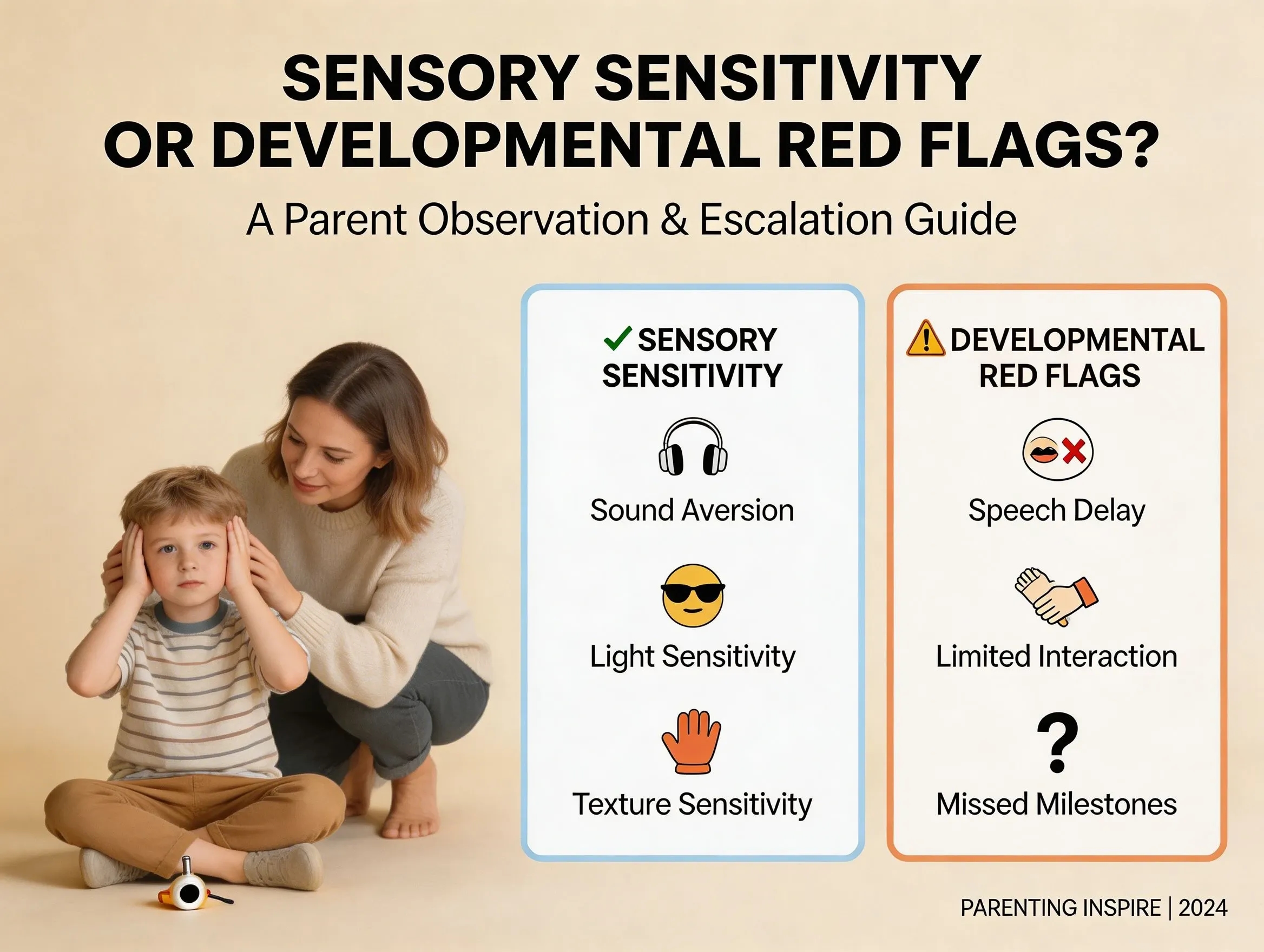
Many babies show sensory preferences: some dislike loud noise, some avoid certain textures, some need more movement input. Variation alone is often normal.
The key question is whether patterns are temporary differences or persistent signs affecting function and development.
First rule: one behavior is not the diagnosis
Use pattern-based thinking:
- duration (days vs persistent weeks/months)
- intensity (mild dislike vs major distress)
- breadth (one context vs many contexts)
- function impact (feeding, sleep, interaction, play)
Concerns rise when multiple domains are affected over time.
What can be within normal variation
Examples often seen in typical development:
- brief startle to loud sounds
- temporary dislike of new textures
- inconsistent engagement depending on sleep/feeding state
- short phases of clinginess or novelty avoidance
Transient variability is common in infancy.
Potential red-flag patterns to discuss early
Persistent patterns that may warrant clinical review include:
- consistently low social engagement/limited shared attention trajectory
- minimal response to sound/voice or visual interaction over time
- pronounced asymmetry or unusual movement/tone pattern
- repeated severe distress with ordinary sensory input across settings
- loss of previously demonstrated skills
If you see repeated concern clusters, seek professional guidance.
Practical observation tool (2-week pattern log)
Track daily in four columns:
- trigger context (sound/light/touch/transition/feeding/play)
- behavior response (mild discomfort/moderate distress/severe distress)
- recovery time and strategy needed
- functional impact (feeding, sleep, engagement)
Bring this log to pediatric visits for more accurate triage.
Home support while monitoring
Supportive steps:
- reduce simultaneous stimuli
- keep routines predictable
- introduce new sensory inputs gradually
- use calm transition rituals
- maintain responsive interaction and play opportunities
Avoid forcing exposure when baby is already dysregulated.
What not to do
Do not panic from single social-media comparisons
Milestones and sensory behavior vary across children.
Do not wait months with persistent concerns
Early evaluation is usually beneficial.
Do not label too early without assessment
Use neutral observation language and professional follow-up.
Do not remove all stimulation long-term
Balanced, safe, responsive exposure remains important for development.
When to escalate urgently vs routinely
Urgent escalation
Seek urgent care if concerning sensory/behavior signs occur with:
- breathing issues
- altered consciousness
- seizure-like activity
- acute severe illness features
Routine-but-early developmental follow-up
Book developmental review when pattern concerns persist across weeks and affect daily function.
FAQ
Is sensory sensitivity always a disorder?
No. Many sensory differences are part of normal variation.
How long should I observe before asking for help?
If concerns are persistent and function-impacting, seek guidance early rather than waiting.
Should I stop all challenging sensory inputs?
No. Use gentle gradual exposure with regulation support.
What is most useful to bring to appointments?
A structured 2-week trigger-response-function log.
References
- CDC: Developmental monitoring and screening
- CDC: Developmental milestones
- WHO: Improving early childhood development guideline
- WHO: Nurturing care
- UNICEF Parenting: How babies learn through play
- AAP: Early relational health interventions and referrals
Final takeaway
Sensory differences are common, but persistent multi-context patterns with functional impact deserve early review. Observe systematically, support regulation at home, and escalate when trends—not single moments—raise concern.